
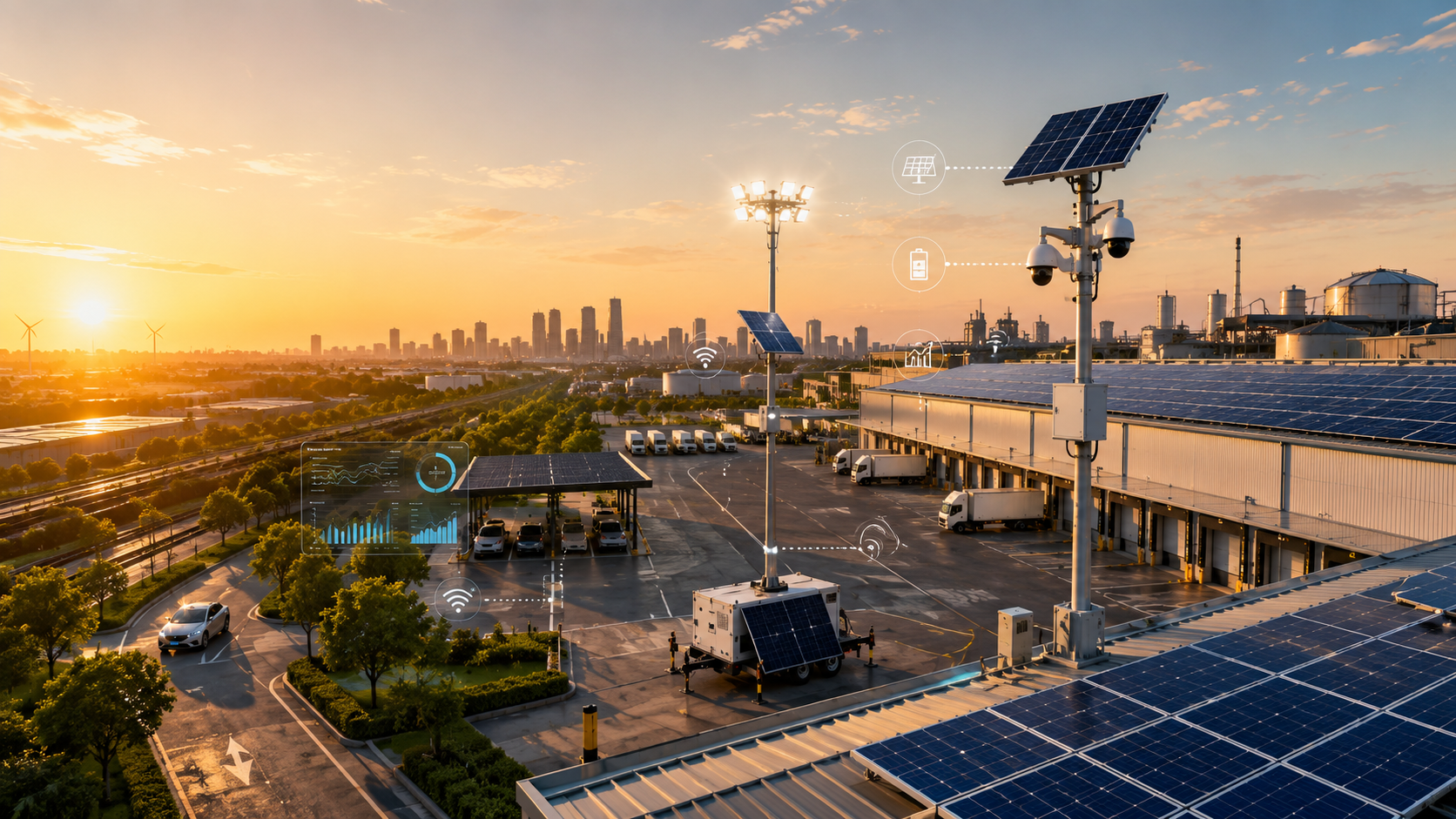
These technologies are helping organizations create sustainable and energy-independent operations.
Commercial and industrial rooftop solar installations enable organizations to generate clean electricity directly from available roof space. These systems significantly reduce electricity bills, lower carbon emissions, and provide long-term energy savings.
Security is a critical requirement for construction sites, industrial facilities, mining operations, warehouses, and remote infrastructure projects. Solar-powered surveillance towers offer round-the-clock monitoring without requiring grid connectivity.
Benefits include:
Solar light towers provide efficient illumination for construction projects, industrial yards, highways, events, and emergency response operations. Unlike traditional diesel-powered systems, solar light towers operate silently and without fuel costs.
Advantages include:
Mobile solar generators offer a portable and reliable source of electricity for temporary sites, disaster management operations, events, and remote projects. These systems can be transported easily and deployed quickly wherever power is required.
By harnessing solar energy, organizations can significantly reduce fuel expenses and electricity costs. The return on investment becomes increasingly attractive as energy prices continue to rise.
Smart solar systems provide reliable power even in locations with limited grid access. Integrated battery storage ensures uninterrupted operation during power outages.
Solar-powered infrastructure helps reduce greenhouse gas emissions and supports environmental sustainability goals. Organizations can strengthen their ESG (Environmental, Social, and Governance) commitments while reducing their carbon footprint.
Many solar infrastructure solutions are designed for quick installation and mobility, making them ideal for temporary or remote projects.
Modern solar systems require minimal maintenance and are designed to operate efficiently for years, providing dependable performance and long-term value.
Smart solar infrastructure is being adopted across multiple sectors, including:
As technology continues to advance, smart solar infrastructure will become even more intelligent and efficient. Integration with IoT devices, AI-based monitoring systems, remote diagnostics, and energy management platforms will further enhance performance and reliability.
Organizations that invest in smart solar infrastructure today are not only reducing costs but also preparing for a more sustainable and energy-secure future.
Smart solar infrastructure represents the perfect combination of renewable energy, operational efficiency, and technological innovation. Whether it's powering a facility, securing a remote site, illuminating a work area, or providing mobile electricity, solar-powered solutions offer a practical and sustainable answer to modern energy challenges.
By adopting smart solar technologies, businesses and institutions can achieve greater energy independence, improve sustainability, and contribute to a cleaner and greener future.