About Us
FireTuff Private Limited is committed to safeguarding lives, property, and the environment by offering advanced firefighting equipment and solutions.
FireTuff Private Limited is committed to safeguarding lives, property, and the environment by offering advanced firefighting equipment and solutions.
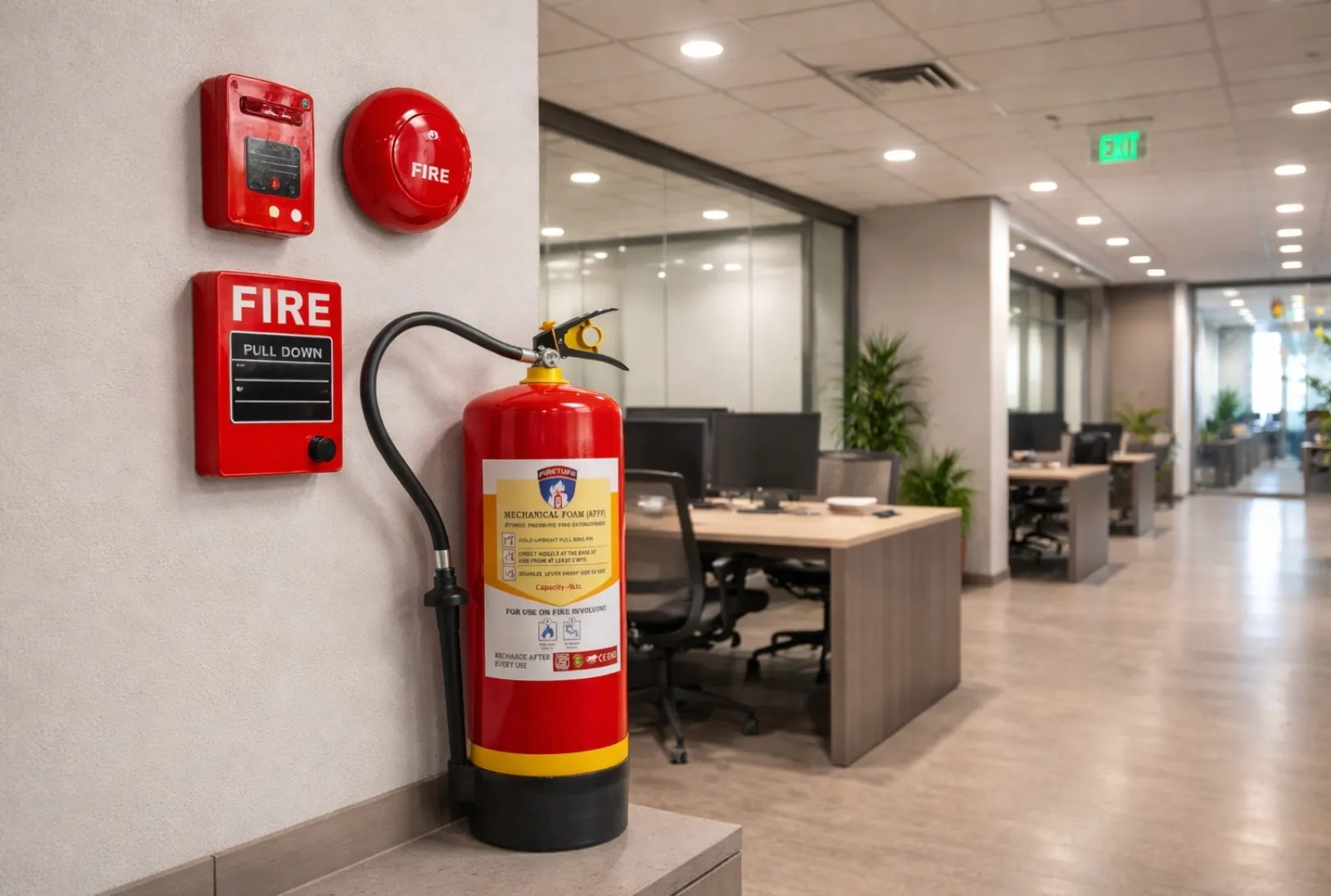
Safety is a fundamental aspect of any workplace, and offices and hospitals are no exception. At Fire Tuff Protection, we are dedicated to delivering comprehensive safety solutions tailored to the unique requirements of these environments. In this blog, we explore essential fire safety equipment for offices and delve into the gases used in hospital safety systems to ensure a secure and hazard-free atmosphere.
Fire Safety in Offices
Offices are bustling hubs of activity, often equipped with extensive electrical systems, appliances, and flammable materials. Implementing robust fire safety measures in these environments is crucial to safeguarding employees, equipment, and critical data.
Key Fire Safety Equipment for Offices:
� Fire Extinguishers: Multi-purpose ABC fire extinguishers are ideal for office environments, capable of addressing fires caused by electrical equipment, flammable liquids, or paper materials.
� Smoke Detectors and Alarms: These devices provide early warnings, enabling swift evacuation and reducing potential damage.
� Fire Suppression Systems: Automated systems, such as FM200 and NOVEC1230, are effective for protecting sensitive electronic equipment in server rooms.
� Emergency Exit Lighting: Properly lit exits guide employees to safety during emergencies, minimizing confusion and delays.
� Fire Curtains and Dampers: Designed to contain fires and prevent their spread, these tools are invaluable in open office layouts.
Why Choose Fire Tuff Protection for Office Safety? Our office fire safety equipment combines state-of-the-art technology, ease of use, and adherence to strict safety standards, ensuring comprehensive protection for all occupants.
Safety Beyond Fire Suppression: Hospitals also rely on gas-based solutions for patient care and infection control. For instance, compressed medical gases like oxygen, nitrogen, and nitrous oxide play vital roles in various treatments. Proper storage and handling of these gases are essential to avoid potential hazards.